KARESANSUI
枯山水
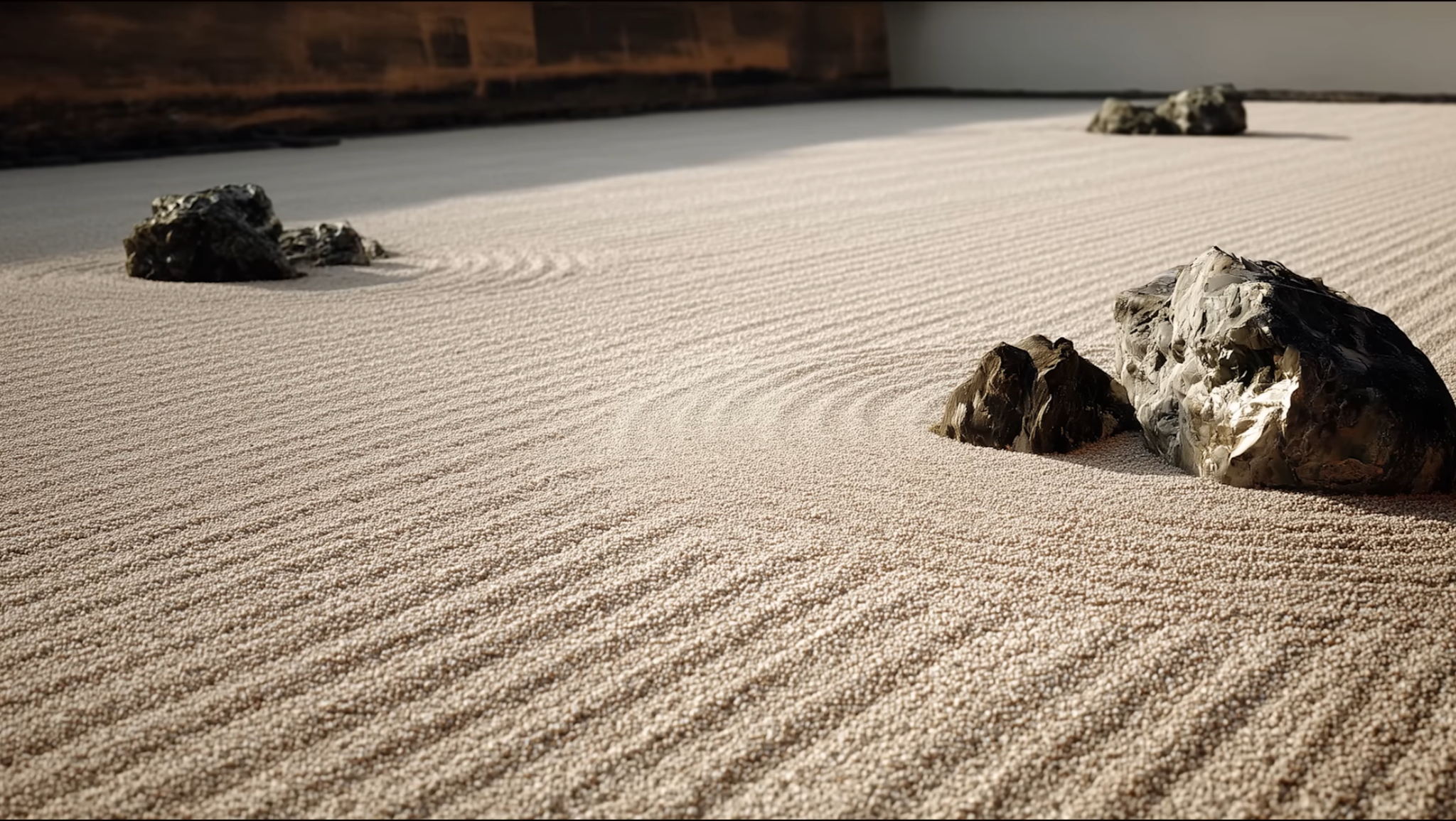
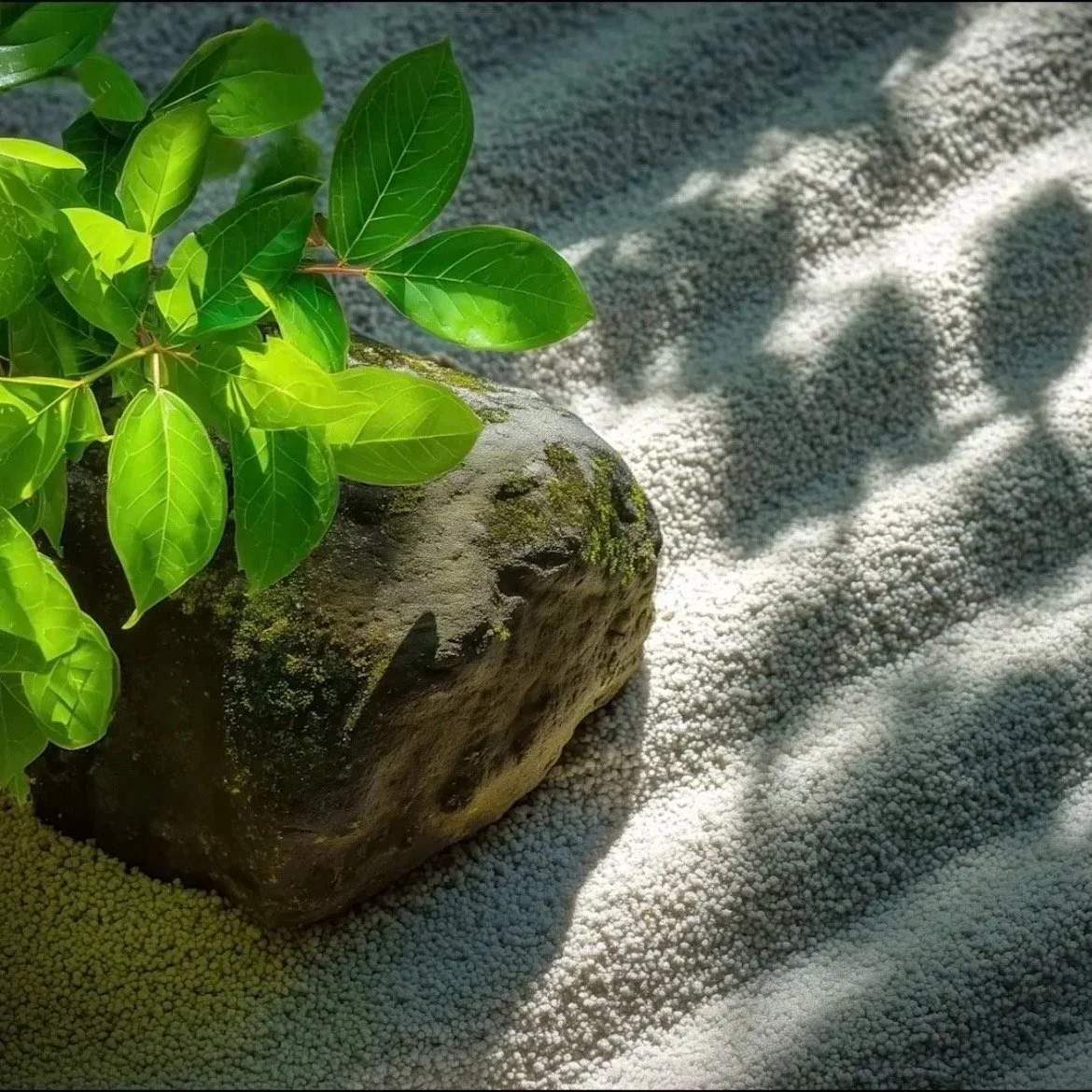
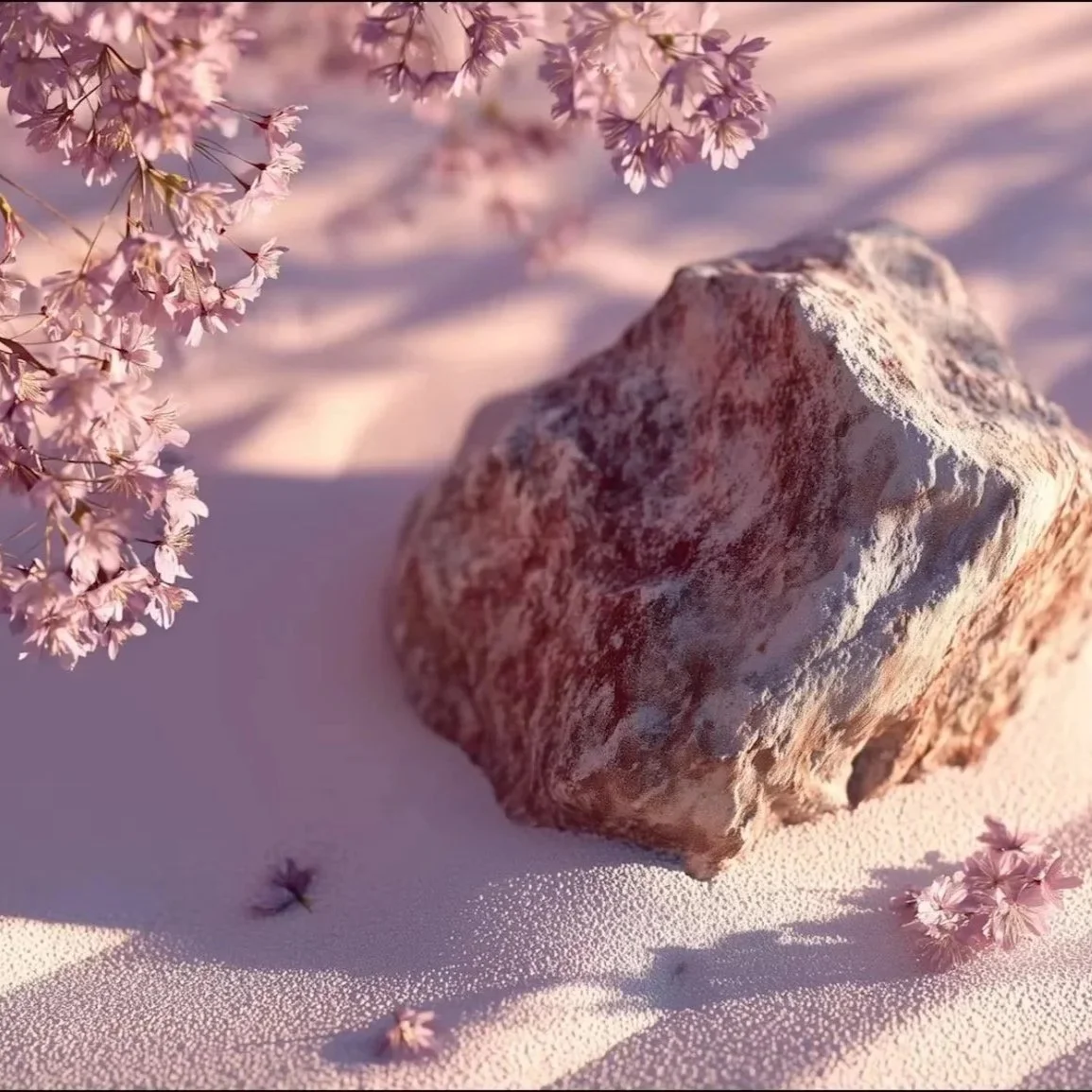
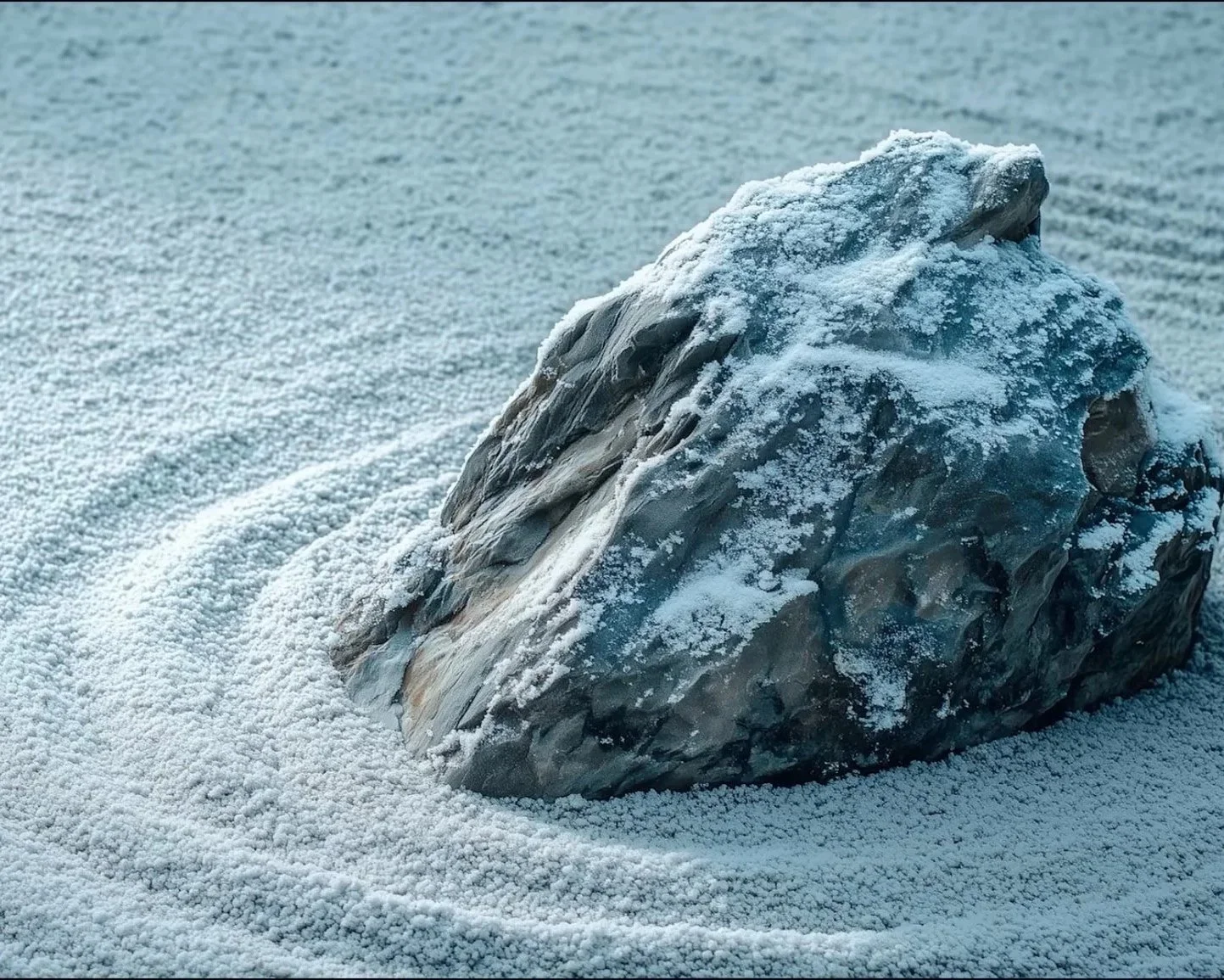
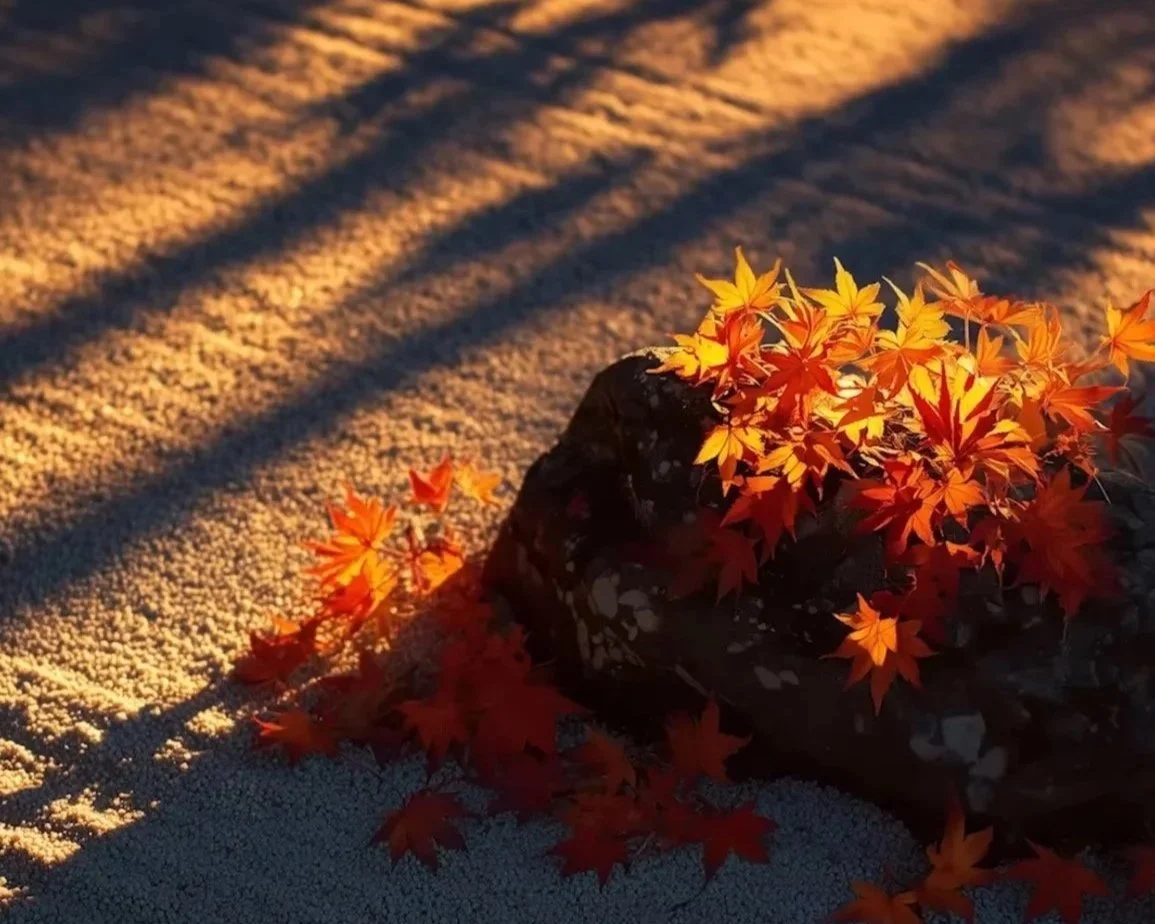
Karesansui, or “dry mountain water,” expresses Zen wisdom through simplicity, space, and quiet presence. Rather than describing nature, it invites us to feel into what is essential. Form and emptiness are not separate — just as sensation and awareness are not separate in the body.
The open space of the garden reflects Ma — a living stillness where nothing is forced and nothing is missing. In this spaciousness, the system has room to settle. The gently raked sand embodies impermanence, reminding us that change is natural, rhythmic, and continuous — like breath, like tides within the nervous system.
At Ryoan-ji, the fifteen stones can never all be seen at once. Wholeness is present, even when not fully visible. Healing can be this way too — unfolding gradually, revealing itself layer by layer.
In this sense, a karesansui garden becomes a somatic mirror. It does not impose meaning. It offers space. And within that space, the body remembers how to soften, reorganize, and return to its own quiet intelligence.
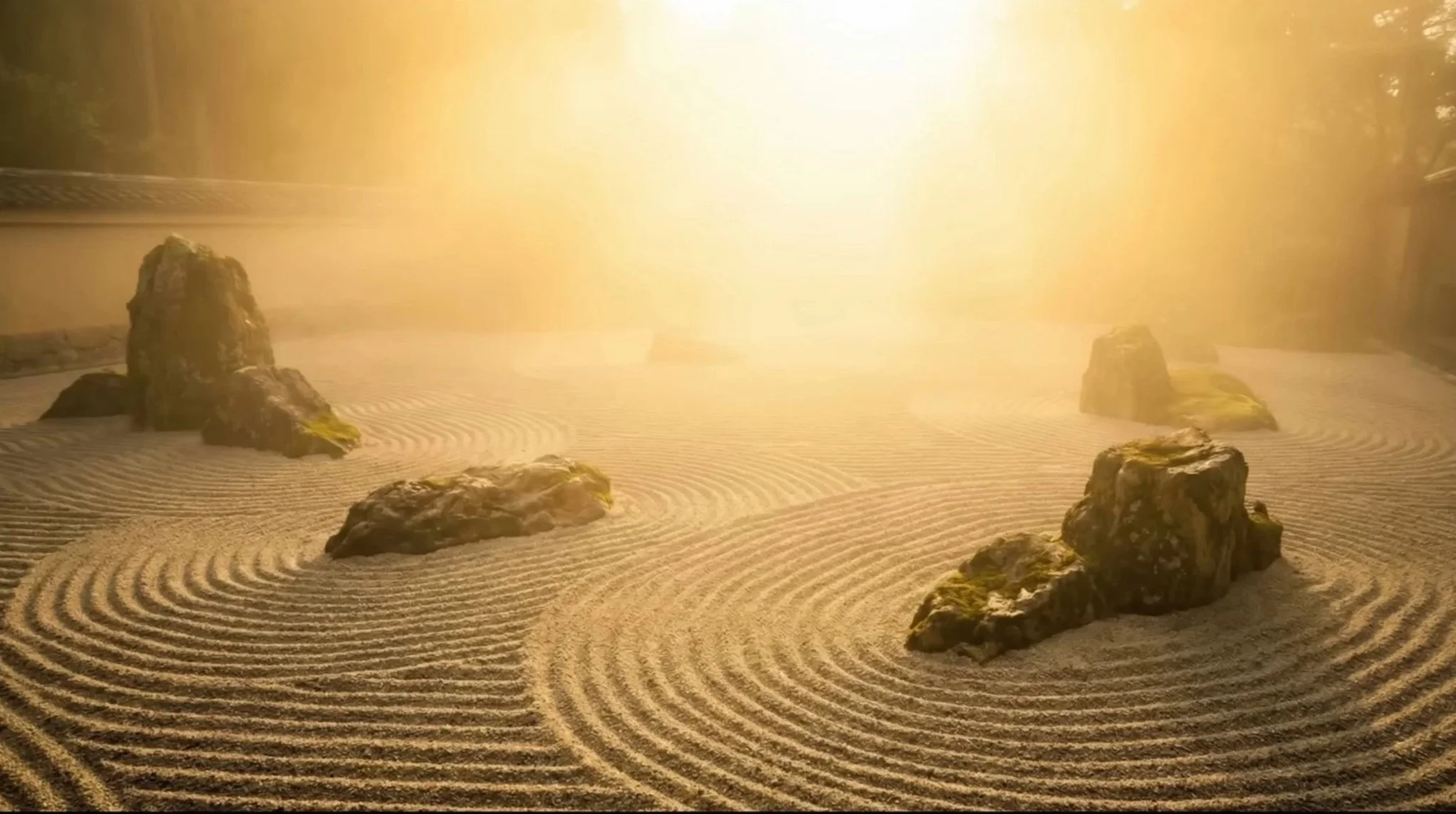
Karesansui —
stones resting
in open space.
No water,
yet waves appear
in quiet sand.
Nothing added.
Nothing forced.
In the stillness,
the body settles.
Form and emptiness
meeting gently —
and something within
returns to flow.